
What a Dry Golf Course Can Teach Us About Looking After Your Lawn
Earlier this year, Kingsbury Lawn Care became a sponsor of Aston Wood Golf Club. In July, three of our team - Jack, Stan and Matt - finally had the opportunity to get out and play the course for ourselves.
It was a warm day, the course was playing firm and fast, and all three of us were thoroughly tested. However, the contrasting condition of the fairways, tees and greens also offered some useful lessons about how turf responds during prolonged dry weather.
A challenging day at Aston Wood
Aston Wood is an excellent and extremely challenging course. Stan, who is comfortably the best golfer among us and has previously worked on golf courses, was certainly tested by it. Jack and Matt found it even more demanding and managed to lose several balls between them!
Kingsbury Lawn Care sponsors the 15th hole, so naturally this was one we were looking forward to playing. Unfortunately, Jack managed to find the water from the tee -perhaps not quite the performance expected from the hole sponsor!
Despite the golf, it was a thoroughly enjoyable day. We have also been delighted to welcome four Aston Wood members as Kingsbury Lawn Care customers since becoming a sponsor and look forward to returning for another round.

Why were the fairways so dry and firm?
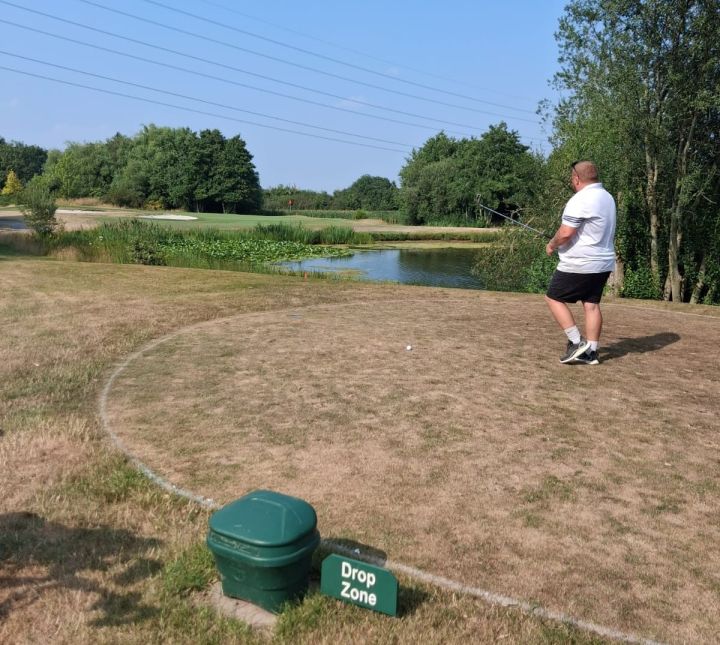
Like many domestic lawns across Sutton Coldfield, Aston Wood’s fairways were extremely dry following the prolonged warm and dry conditions.
Grass responds to a shortage of water by slowing its growth and conserving energy. It may lose its green colour and enter a dormant state, but this does not necessarily mean the grass is dead. Once cooler conditions and meaningful rainfall return, much of it may begin to recover naturally.
Golf-course fairways cover an enormous area, making it difficult - and potentially wasteful - to irrigate them as intensively as smaller, higher-priority areas. The same principle can apply at home. Watering a large lawn properly requires considerably more water than many people realise.
A quick sprinkle may dampen the surface, but it will often do little to improve moisture levels deeper in the soil.
Why did the tees and greens look so different?
The tees were still firm, but targeted irrigation had helped them cope better with the dry weather. The greens were in superb condition, providing a striking contrast to the fairways.
Golf greens receive very different maintenance from domestic lawns. They benefit from specialist irrigation, carefully managed nutrition and an intensive programme of fine-turf maintenance. It would therefore be unrealistic to expect an ordinary lawn to perform in exactly the same way.
However, the underlying lesson remains useful - where turf receives the right amount of water, appropriate nutrition and consistent care, it is far better equipped to remain healthy during challenging conditions.
What can homeowners learn from this?
If you decide to water your lawn, it needs to receive enough water to reach the soil and encourage deeper rooting. Frequent, very light watering often wets only the surface and can create a lawn that is more dependent on regular irrigation.
Where water is limited, prioritise newly seeded, recently repaired or particularly vulnerable areas. Established grass can often be allowed to enter dormancy and recover when wetter conditions return.
During prolonged dry weather, it also helps to:
- Raise the mowing height and avoid cutting the lawn too short.
- Reduce mowing frequency when growth has slowed.
- Avoid unnecessary wear on badly stressed areas.
- Delay quick-release fertiliser applications until moisture levels improve.
- Avoid assuming that every brown or patchy area needs replacing.

Will a dry lawn recover?
Many lawns recover surprisingly well once temperatures fall and consistent rainfall returns. Dormant grass can begin growing again without needing major remedial work.
However, areas that have become thin, badly worn or genuinely damaged may need additional help. Overseeding can restore grass coverage, while aeration may improve compacted soil and help water reach the root zone more effectively.
Autumn usually provides the best conditions for repairing summer damage. The soil remains warm enough for seed germination, while cooler temperatures and more reliable rainfall reduce stress on young grass.
If you are unsure whether your lawn is dormant, damaged or in need of fuller renovation, a professional lawn survey can identify the most appropriate next step.
Looking forward to our next round
We thoroughly enjoyed our first team round at Aston Wood and were impressed by both the course and the condition of its fine turf during an exceptionally challenging summer.
We look forward to returning - hopefully with fewer lost balls and a better result for the sponsors of the 15th hole!
Would you like to benefit from the knowledge and products of greenkeepers in your garden?
If your lawn is looking dry, yellow or patchy, Kingsbury Lawn Care can help you understand what is likely to be happening and what the next sensible step should be.
Click below to gain an Instant Estimate, or get in touch via WhatsApp.