
When to Overseed a Lawn in the UK — and How to Do It Properly
Overseeding is one of the best ways to thicken a thin, tired or patchy lawn. It involves adding fresh grass seed into an existing lawn to improve density, fill bare areas and help the lawn recover from stress, wear, moss, drought or renovation work.
But overseeding is not simply a case of throwing grass seed over the lawn and hoping for the best.
For grass seed to germinate properly, it needs the right timing, good contact with the soil, enough warmth, consistent moisture and suitable aftercare. If seed is left sitting in thatch, moss or long grass, it is unlikely to perform well. For most UK lawns, early autumn is the best time to overseed. If we had to choose one month, September would usually be the answer.
After the dry and hot spring and summer conditions we have seen this year, overseeding is likely to be especially important. Many lawns have become thin, open and patchy, and autumn gives homeowners the best opportunity to repair that damage before winter.
If you lawn is already thin, brown or damaged, you may also find our guide to fixing a patchy lawn after a dry summer helpful before deciding whether overseeding alone is enough.
The best time to overseed a lawn in the UK
The best time to overseed a lawn in the UK is usually early autumn, with September being the ideal month in most cases.
This is because September gives grass seed the best balance of warmth and moisture. The soil is still warm after summer, daytime and night-time temperatures are usually suitable, and the days are beginning to shorten. As we move further into autumn, conditions also tend to become damper and rainfall becomes more reliable.
Grass seed germinates in the soil, not in the air. A mild day in spring can feel promising, but if the soil is still cold, germination will be slow. In September, the soil has retained warmth from summer, giving seed a much better chance of getting started quickly.
The wider overseeding window is usually from mid-August through much of October, depending on the weather, soil temperature and location. In mild years, overseeding can still work well into October. In cooler, exposed or shaded lawns, September is usually the safer target.
The key message is simple: do not leave it too late. Once soil temperatures drop and daylight reduces further, seed will take longer to germinate and establish. A further advantage of September is if an area was to struggle, there is still time to touch it up.
Why autumn is better than spring for overseeding
A spring overseeding service can work, but autumn usually gives more reliable results.
The main reason is soil temperature. In spring, the air can warm up quite quickly, but the soil often takes longer to catch up after winter. This means grass seed may sit for longer before it germinates, especially in March or early April.
Autumn is different. The soil is already warm from summer, which encourages seed to germinate. At the same time, shorter days and cooler conditions reduce evaporation, meaning the seedbed is less likely to dry out as quickly as it would in summer.
Moisture is another major advantage. Spring can be surprisingly dry, and if seed is applied in April or May without regular rainfall, the homeowner has to water carefully and consistently. In autumn, rainfall is usually more dependable, especially from late September onwards.
Autumn also gives new grass time to establish before winter. A thicker lawn going into winter is better placed to resist moss, weeds and general thinning. Waiting until spring often means the lawn stays weak through the colder months, then has to recover just as the weather may become dry again.
Why 2026 has made overseeding more important
The 2026 growing season has been tough on lawns.
Many lawns have had to cope with dry conditions from spring onwards, followed by repeated spells of heat. Even where rain has arrived, it has often not been enough to fully rehydrate dry soils or reverse months of drought stress. As a result, lots of lawns are now looking thin, brown, open or patchy.
A thick, healthy lawn that has gone brown through drought stress may recover well once regular rainfall returns. Grass can go dormant during dry weather and then green up again when conditions improve.
But a thin or unhealthy lawn is more vulnerable. If the lawn was already mossy, thatchy, compacted, weak or cut too short before the dry weather arrived, the damage can be more serious. Thin grass allows sunlight to reach the base of the plant and the soil surface. This dries the lawn faster and can scorch the crown of the grass plant. In some areas, the grass may not fully recover without new seed.
This is why overseeding matters after a year like this. It helps rebuild density, fills gaps before moss and weeds take advantage, and gives the lawn a chance to recover while soil temperatures are still favourable.
Can you overseed in spring or summer?
You can overseed in spring or summer, but both seasons come with more challenges.Spring is a common time for homeowners to think about lawn repair. Overseeding in spring can work, especially in April or May once soil temperatures have improved. The problem is that spring is not always as reliable as it looks. The soil can still be cold, germination may be slower than expected, and rainfall can be inconsistent.
Summer overseeding is possible too, but it is usually harder. Warm soil can help germination, but heat, strong sun and dry conditions can make it difficult to keep seed consistently damp. Young seedlings have shallow roots, so they are especially vulnerable to drying out.
Summer overseeding is best limited to small repairs where watering is realistic. Larger overseeding or renovation work is usually better left until early autumn, when conditions are more favourable.
The simple rule is this: grass seed needs warmth and moisture. Autumn usually gives the best balance of both.
How to prepare a lawn before overseeding
Preparation is one of the biggest differences between successful overseeding and disappointing results.
Before grass seed is applied, the lawn surface needs to be ready. Seed must be able to reach the soil. If it is trapped in long grass, moss, thatch or loose debris, it may dry out, get eaten by birds, or fail to germinate properly.
Start by mowing the lawn. The grass should be cut short enough to allow seed to reach the surface, but not scalped. Cutting too aggressively can stress the existing grass, especially after a dry summer.
Next, clear away loose debris such as leaves, dead grass and surface material. If the lawn contains moss or thatch, scarification may be needed. Scarification removes this dead organic layer and opens up space for new seed.
Where the soil is compacted, aeration can also help. Aeration creates holes in the soil, improves air and water movement, and helps roots develop more strongly. It is especially useful on lawns affected by heavy use, clay soil, foot traffic, pets or garden furniture.
In some cases, top dressing may also be applied. This can help improve the seedbed, protect the seed and improve seed-to-soil contact.
The goal is to create the best possible conditions for germination. Overseeding works best when the existing lawn has been opened up properly and the seed can make direct contact with the soil.
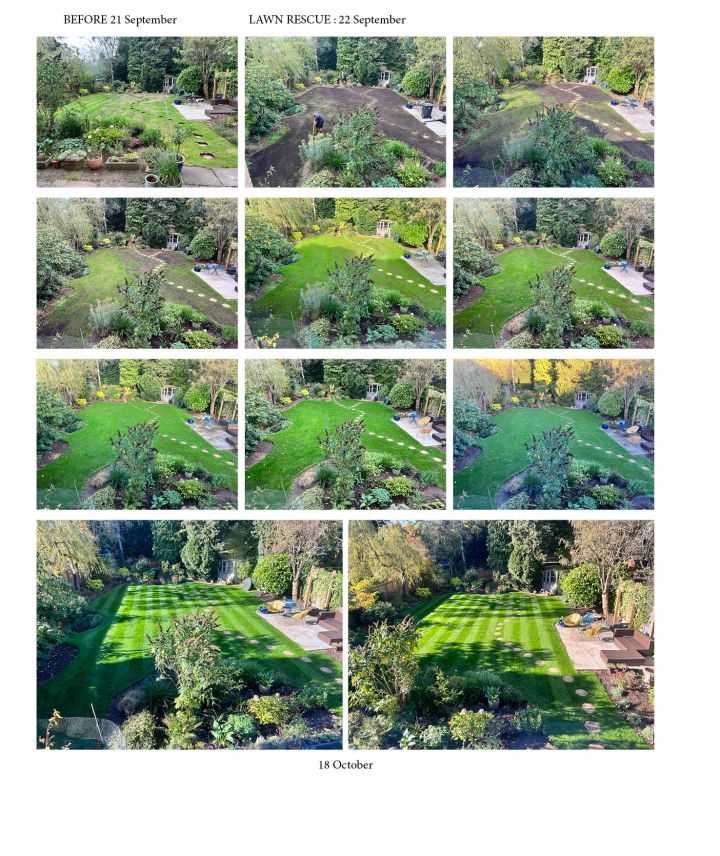
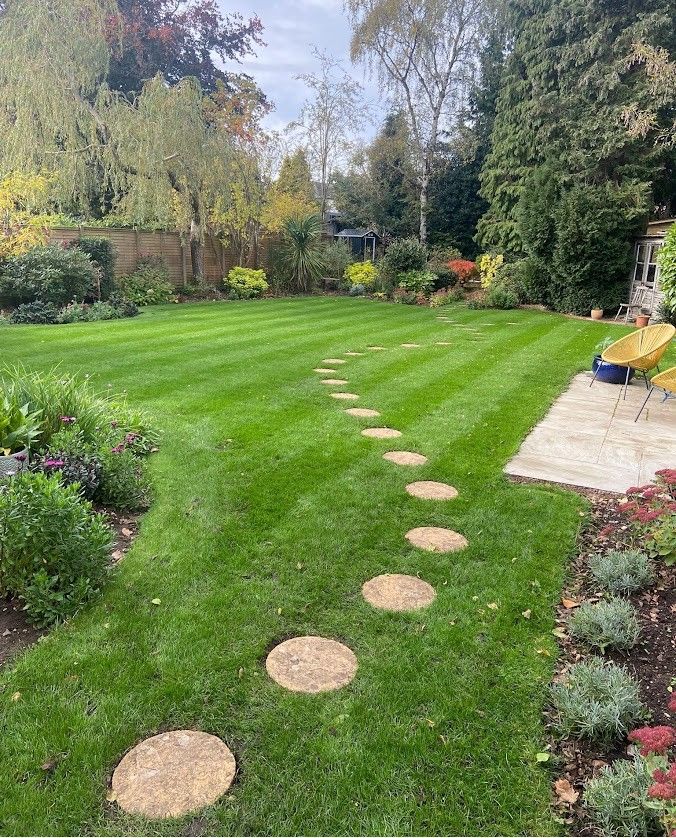
A great example of how quickly a lawn repair and renovation service can turn around in the autumn as shown with this rear lawn we reseeded in Sutton Coldfield. Top dressing enhances the soil contact and gives additional germination security, along with smoothing the lawn surface.
Why seed-to-soil contact matters
Seed-to-soil contact is essential. Grass seed needs to absorb moisture from the soil before it can swell and produce its first shoot. If the seed is sitting in moss, thatch, long grass or loose debris, it may not be able to access that moisture properly.
This is one of the most common reasons overseeding fails
.A homeowner may buy good-quality grass seed, apply it at the right time of year, and still get poor results because the seed never reaches the soil. It sits on top of the lawn canopy, dries out, or gets moved by wind, rain, birds or mowing.
This is why preparation matters as much as timing. If the lawn has heavy thatch, scarification may be needed before overseeding. If the soil is compacted, aeration can help open the surface. If there are bare or uneven areas, top dressing may help improve the seedbed.
Good seed-to-soil contact does not guarantee perfect results, because moisture and aftercare still matter. But without it, overseeding is always more of a gamble.
How to water after overseeding
Watering is one of the most important parts of overseeding aftercare.
Grass seed must stay damp long enough to absorb moisture, swell and germinate. If the seed dries out repeatedly during this stage, germination can be delayed, uneven or unsuccessful.
In early autumn, natural rainfall often helps. But it should not be assumed that rain will do everything. Dry spells can still happen in September and October, and newly seeded areas may still need watering.
The aim is to keep the seedbed consistently damp, not waterlogged.Use a fine spray or gentle sprinkler rather than a heavy flow of water. Heavy watering can wash seed into clumps, move it away from bare patches, or create uneven results. Light, regular watering is usually better than occasional heavy soaking.
After germination, the new seedlings still need care. They have shallow roots at first, so they can dry out quickly. Continue monitoring moisture while the grass establishes, especially during warm, dry or windy weather.
The first few weeks after overseeding are crucial. This is where many overseeding jobs either succeed or fail.
Should you overseed yourself or use a professional service?
Some overseeding can be done successfully by homeowners.
If the lawn is only lightly thin, and the surface is reasonably clear, you may be able to prepare the area, apply a suitable seed mix, water carefully and achieve a good result.
However, many lawns need more than a light overseed. If the lawn is mossy, thatchy, compacted, badly worn or very patchy, professional help may be worthwhile. In these cases, the preparation is often more important than the seed itself. Lawn scarification, aeration, correct seed choice, top dressing and aftercare advice can all make a significant difference.
A professional overseeding service is not just about applying grass seed. It is about understanding why the lawn has become thin, preparing the surface properly, choosing the right timing, and giving the new grass the best chance of establishing.
For lawns that have suffered after a dry spring and summer, autumn is the key window. If you want the lawn to recover before winter, it is better to act while the soil is still warm and the weather is turning more favourable.
Final Thought: Act in Autumn, Not Next Spring
The best time to overseed a lawn in the UK is usually early autumn, with September being the ideal month for most lawns.
Autumn works because the soil is still warm, the days are shorter, moisture levels improve, and rainfall usually becomes more reliable. These conditions give grass seed a better chance of germinating and establishing before winter.
But timing alone is not enough.For overseeding to work properly, the lawn needs good preparation, strong seed-to-soil contact, consistent moisture and careful aftercare. Seed sitting in moss, thatch or dry soil is unlikely to perform well, even if it is applied at the right time of year.
After the dry conditions of 2026, many lawns will benefit from overseeding this autumn. Some may only need light repair, while others may need scarification, aeration or more complete renovation work.
If your lawn is thin, bare or patchy, now is the time to plan. September is the opportunity. Preparation is what makes it work.